windower_xs HDL Worker
Detail
Worker Properties
max_window_lengthType:
ushortAccess:
Parameter:
TrueWritable:
FalseInitial:
FalseVolatile:
FalseRead back:
False
Default value:
None
ocpi_buffer_size_outputType:
ushortAccess:
Parameter:
FalseWritable:
FalseInitial:
TrueVolatile:
FalseRead back:
False
Default value:
0
ocpi_blocked_outputType:
ulongAccess:
Parameter:
FalseWritable:
FalseInitial:
FalseVolatile:
TrueRead back:
False
Default value:
None
ocpi_max_latency_outputType:
ushortAccess:
Parameter:
TrueWritable:
FalseInitial:
FalseVolatile:
FalseRead back:
False
Default value:
None
ocpi_latency_outputType:
ushortAccess:
Parameter:
FalseWritable:
FalseInitial:
FalseVolatile:
TrueRead back:
False
Default value:
None
ocpi_messages_outputType:
ulongAccess:
Parameter:
FalseWritable:
FalseInitial:
FalseVolatile:
TrueRead back:
False
Default value:
None
ocpi_bytes_outputType:
ulongAccess:
Parameter:
FalseWritable:
FalseInitial:
FalseVolatile:
TrueRead back:
False
Default value:
None
Worker Ports
inputProtocol:
complex_short_timed_sampleOptional:
False
outputProtocol:
complex_short_timed_sampleOptional:
False
Inputs:
Outputs:
All data that is not sample data is sent through the protocol interface delay block and a pipeline delay is added. Any sample data is stripped off and sent into the window function primitives.
The diagram below shows for complex data there will be two window primitives instantiated. At start-up the coefficient DPRAM is filled with coefficient data from the raw property interface. When a sample comes into this component the coefficient counter is incremented which is used as the DPRAM address to read out the next coefficient. The data out from the window primitives is multiplexed back into the protocol within the protocol interface delay. This component is designed so that the coefficients can be changed during runtime.
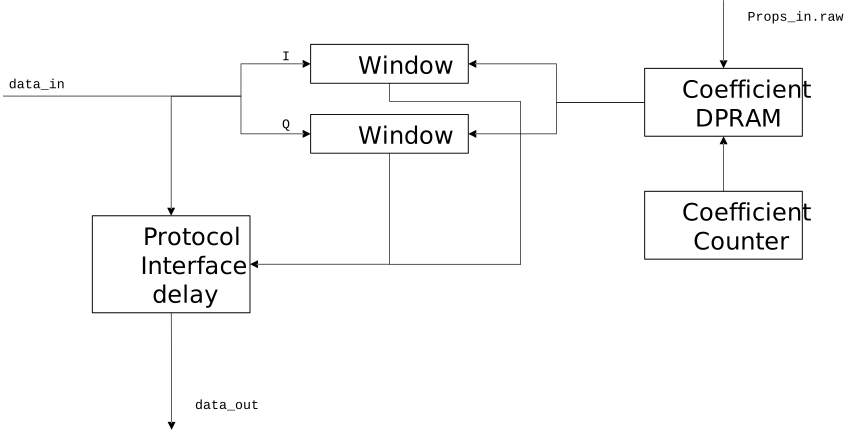
Figure 110: Windower implementation.
Utilisation
Utilization reporting is not currently implemented.