bit_stuffer_b HDL Worker
Detail
A block diagram of the HDL worker implementation is shown below, where \(x[n]\) is the input and \(y[n]\) is the bit stuffed output.
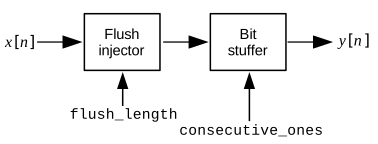
Figure 3: Bit stuffer HDL implementation.
The purpose of the flush inserter is to apply back pressure to the input interface and output flush_length zero samples whenever a flush opcode is received.
Worker Properties
ocpi_buffer_size_outputType:
ushortAccess:
Parameter:
FalseWritable:
FalseInitial:
TrueVolatile:
FalseRead back:
False
Default value:
0
ocpi_blocked_outputType:
ulongAccess:
Parameter:
FalseWritable:
FalseInitial:
FalseVolatile:
TrueRead back:
False
Default value:
None
ocpi_max_latency_outputType:
ushortAccess:
Parameter:
TrueWritable:
FalseInitial:
FalseVolatile:
FalseRead back:
False
Default value:
None
ocpi_latency_outputType:
ushortAccess:
Parameter:
FalseWritable:
FalseInitial:
FalseVolatile:
TrueRead back:
False
Default value:
None
ocpi_messages_outputType:
ulongAccess:
Parameter:
FalseWritable:
FalseInitial:
FalseVolatile:
TrueRead back:
False
Default value:
None
ocpi_bytes_outputType:
ulongAccess:
Parameter:
FalseWritable:
FalseInitial:
FalseVolatile:
TrueRead back:
False
Default value:
None
Worker Ports
inputProtocol:
bool_timed_sampleOptional:
False
outputProtocol:
bool_timed_sampleOptional:
False
Inputs:
Outputs:
Utilisation
Utilization reporting is not currently implemented.